
Things I've learned writing my book
Book leave dispatch #2
Hi from the third and final month of my book leave. It’s been quite the journey, and while I’m not yet at the end, I can now finally see the end, which I definitely could not say before. I feel like I’m on track to meet my deadline, which I sure hope I’m not jinxing by saying out loud here. But I am feeling good, and tired, and excited and tired. Hi also from week 35 of pregnancy!
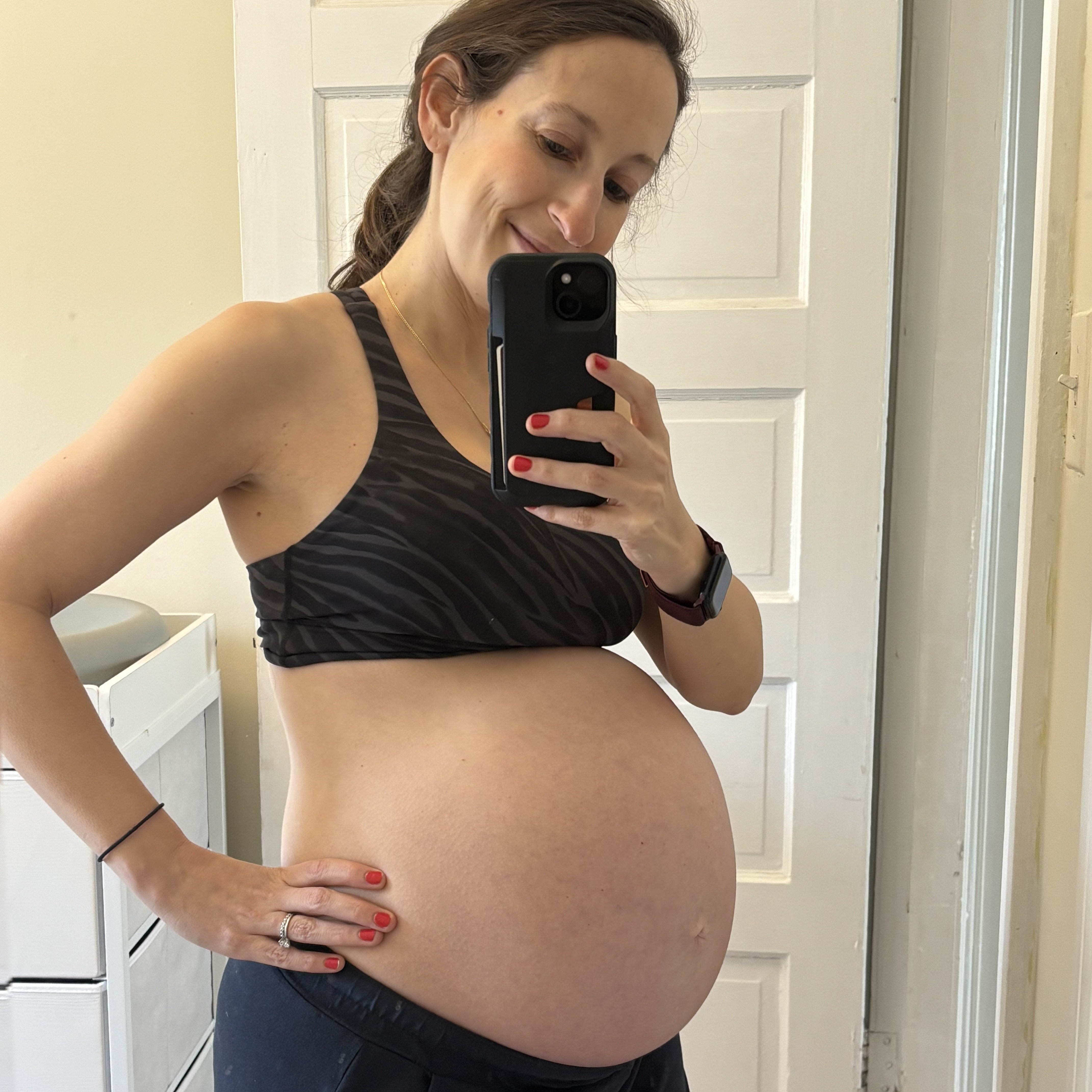
This post is not about marketing a book or insights on publishing trends. It was inspired by a note I got from a loved one curious about book writing and asking if I had any thoughts. I sat down one night in December and sent them some ideas, and thought hmm maybe I should just share this more broadly. I meant to send it in January, but my energy has definitely been flagging and so lots of things I thought I’d do on top of book writing while on leave have really been getting sidelined. Make social videos! Experiment more with Reddit! Pick back up needlepointing! Learn new recipes! None of these things have happened, but the cooking of the book and baby is a-go, and as my people say, dayenu.
Ok here we go:
So if you’re feeling curious or interested in writing a book I would first put forward two things to consider:
1. Sometimes, what you think should be a book, should actually be an essay.
2. Sometimes, what starts as an essay can turn into real grist for a book.
An essay is not a lesser-than book. Many books I read would have truly been better as essays (and some essays would have sparkled better as op-eds or tweets.) It’s not always easy to tell what is the right medium, but I think especially in our age of fierce competition for attention, it is really worth asking yourself whether the longest version is the best format in which to communicate what you want to say. Sometimes it is.
For a little personal history, at the start of 2023, I met with my book agent and told her I was interested in writing a book on motherhood dread, on women like me - those of us on the fence about having kids, ambivalent about parenthood and trying to make sense of that decision in a culture of pretty intense negative messaging about the prospect. I felt a book was the right medium because it seemed like such a multifaceted, sensitive topic, and I envisioned different chapters exploring different angles, along with lots of reporting to augment it.
With her encouragement, I spent the next five months working on a book proposal. That was hard work that I did on nights and weekends outside of my regular job, but it was also admittedly personally enriching, since, among other things, it forced me to read many books and essays that helped shape my own thinking and conversations with my then boyfriend. In late May 2023, we sent out the edited proposal to 24 book publishers. A month later all of them politely turned it down.
I remember reading through the rejections—book editors often send agents a paragraph or two explaining why they're passing. Sometimes they’ve already committed to a book on a similar/adjacent topic, oftentimes the feedback from different editors will be very contradictory so it’s hard to really glean clear patterns, or even know what to do differently in the future. A few editors felt my book was not situating itself to be prescriptive enough, which lol is true, I certainly did not want to be prescriptive about what women should do when it comes to having kids, even if that would sell more books. Two editors said they liked the proposal but felt it might read better as a magazine piece than a book.
I remember talking to friends about the feedback I was getting, and saying I’m just glad I wasn’t 25 when I pitched this. Being 31 meant I was old enough to have had years of freelance pitching and rejection under my belt, and so I think I was just able to read their feedback with more curiosity and openness rather than general insecurity. I was still feeling proud of myself for taking a serious swing on something difficult, and I still think my proposal was good, even if the timing wasn't right for the market.
After the rejections, I went back to Vox and asked if I could try and adapt my proposal into an essay. They agreed, and I spent the next six months doing that. When it came out in December 2023, it became the most viral thing I ever published in my decade-plus career. I truly believe it had more cultural impact and attracted more readers than if I had written a book on it. It ended up being the right length, at the right moment, and when it came out, I realized I had actually said all I needed or wanted to say.
So in this case, the two book editors who said it might work better in magazine-format I think were right. When people asked me after if I planned to turn my essay into a book, I said no. I might have been able to get a book deal out of it, (publishers tend to be more receptive if you can point to some sort of audience “proof of concept” for an idea, and lots of good books do spin out of essays), but I knew then I was ready to move on, that I had said my piece, and I did not want to spend more years of my life in the weeds of motherhood dread.
Another good question to ask yourself if you’re thinking about a book is: do you want to spend at least the next 2-3 years thinking about this topic? Does that prospect excite you?
On the other hand, I published my essay on volunteering in August 2024, a project I worked on with no intention of turning into a book. But the act of researching and writing it ended up deeply shaping my thinking on a lot of other things, and has since influenced one of the chapters of the book I’m now drafting.
I think in general the way I tend to think about all this stuff is that while not everything we read or write gets published or cited, and not every interview turns out to be directly relevant to whatever we’re working on, the act of learning and researching is almost never “a waste” of time. And if you’re feeling that internal motivation to learn something, I’d just chase that feeling, and worry less about how it might be instrumental to you later on. It will probably help you think differently about things, and we can never really anticipate what connections or insights that might bring us immediately, or down the line. Which is nice! It takes some pressure off and allows us to enjoy the often mysterious pull of curiosity. Knowing when to stop going down rabbit holes is a post for another day.
Now let's say you've done all this thinking. You're sure—or sure enough—that a book is the right medium. You've written a proposal and it's been accepted. (I can write more on book proposal writing if people want, but I’m going to skip that for now because it’s kind of its whole separate thing. There are of course other ways to write books, including self-publishing or pitching full manuscripts.)
But assuming you’re now starting the book, one of the biggest things I hadn’t thought about before is that each nonfiction chapter should really be built around one main argument/idea. This is different from a chapter topic. This is a chapter point. Of course my favorite books tend to have many interesting ideas packed within each chapter, but if you take a step back, they are all really examples, characters, facts, studies, and stories in support of your chapter’s overall thesis. Being clear on what that point is will help you figure out everything else that goes into it.
Usually if I feel like I don’t have enough to put into a chapter it’s because I haven’t done enough research. (I abide by a similar rule of thumb in journalism: if I’m having “writer’s block” it almost always means I need to do more reporting.) I have found, at least for the book I’m writing now, that it helps to read at least 2-3 books per chapter as background research and context. There are so many great, interesting books out there touching on almost every topic under the sun (or academic article, documentary film, etc) including probably on the topic of your book, and your book will be richer, and more interesting to people if you can show you have done your homework, and are familiar with what’s already been said on that front.
I have found a deeply pleasurable part of this process to be getting to read other people’s books, identifying some of the most interesting things (to me) in those texts, and then finding ways to include them in my own. It’s a nice generative feedback loop, where I get to give credit to those who came before me, while also helping my book shine brighter with some of their great insights. And perhaps most importantly, it helps you answer the crucial question for yourself and for your readers about what makes your book a new, and different contribution to the world. Why should someone read it? How is it in dialogue with the existing work and how does it push the conversation forward? I think having an answer to that question is really useful, beyond just the feeling of “do I want to write a book on this.”
Another good thing I’ve learned through book writing is the concept of an “ideal reader.” Who are you writing for? Who do you imagine reading your book? Chances are you want to sell your book to more than just them, but if you write too generally, trying to appeal to everyone all at once, your book will probably end up coming off as boring and generic. So I think it really helps to imagine writing for a very specific kind of person and just assume if you do that well, there will be other people who like your book, too. Maybe your ideal reader shares your sense of humor, or your values. Sometimes it helps to pick a real person you know. When you’re editing you can ask yourself, “Would this person keep reading?” Publishers will also often ask you what other books you think your ideal reader has liked reading in the past few years, as models.
Now maybe you say, I am not writing this for anyone else, it's just an important vehicle for me to get my thoughts down. And that is totally okay. But it still might be a constructive exercise to picture whether there is someone out there who you hope finds your book particularly useful. And, if you can, write it for them.
The next thing I’d offer is some process tips. Now everyone has different writing habits and preferences but just to share some of mine:
I personally don’t love writing. I don’t consider it a passion of mine, “writer” is not an identity I much associate with. But I really love reporting, getting to the bottom of things, and communicating that information clearly to other people. Doing so requires having written. This is just to say, if you have an idea you believe in, and think a book is the right medium for your message, don’t be intimidated by the authors and writers who talk all the time about how much they love writing. It’s okay if you don’t. You can still write a great, valuable, and needed book.
I give myself writing goals, and just sit and work until I’ve met them. I trust things will work out knowing that my first pass may result in total garbage, but that everything improves with a little time, distance, and editing. So maybe you say, “I’m going to write 650 words today, and I just will not get up until I’ve reached that goal.”
You’d be surprised how quickly that can add up over time, and how motivating it can be to reach those mini thresholds you set. Think of it like the “Couch to 5K” app but for writing. Set yourself up to have a little victory every working day. It’s a victory if you reach your word count one day. It might be two more victories if you spend the next two days editing those 650 words. On day 4, another 650 words.
I know this advice is sort of annoying but writing consistently—not just when you’re feeling inspired—is really how it will get done. I don’t mean write when you’re tired. Take a break, a nap, a walk, anything in that case. But treat your day’s writing, researching, or editing goal like a real non-negotiable that you have to make time for that day. This has obviously been easier for me on book leave than it was prior to December 1, but I researched and wrote half my book prior to December 1.
There’s a lot I’m still learning, and I am really grateful for the people who have talked to me about their book writing experiences, or shared theirs online. I’m listening to the audiobook of Alia Hanna Habib’s new book Take it from Me which is about her life as a nonfiction book agent and have found it pretty refreshing. I’ve also read some of Jon Ronson’s newsletter on nonfiction storytelling, and this newsletter specifically for authors of nonfiction. There’s a lot of stuff out there, and I have no idea if any of what I’ve written above will be helpful. But I hope it is! Even as I mourn the loss this week of The Washington Post's books section, and even as I know the oxygen for reading books is shrinking, I still love them. And I believe many people, including surely some readers of this newsletter, have possible books inside of them.
I’m really, really looking forward to sharing CAPABLE with you all next year. Also, hi! If you’re new here, welcome, it’s free to read — and I won’t clog your inbox, I promise.
this is a great essay. Thanks for your candid assessments. I also worked a bunch on a book proposal that got widely rejected in 2020... I am now grateful i didn't end of spending two more years working on that project, and instead found a much better book subject for me in 2024. Best wishes for the home stretch of your pregnancy.
i'm so excited for your book!!! and also cannot get over this: "I researched and wrote half my book prior to December 1."
i'm in awe, truly